Additively Manufactured Two-Phase Cooling Components for Energy-Efficient Digital Infrastructure- AM2pC
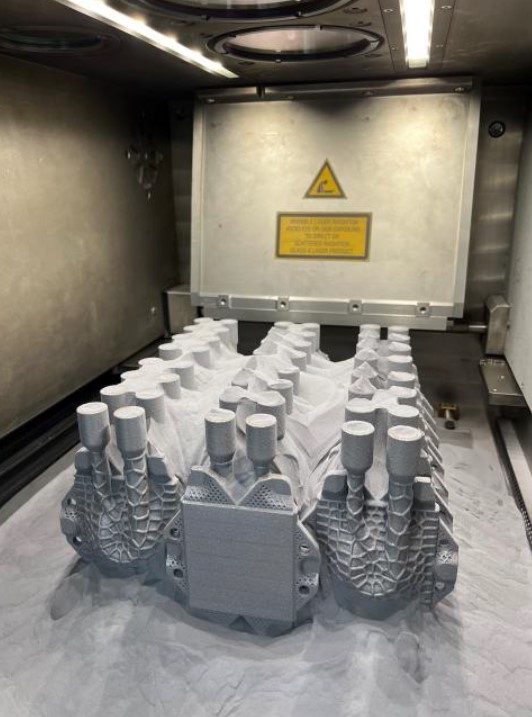
The AM2pC project successfully demonstrated a new class of additively manufactured (AM) two-phase cooling systems capable of handling extreme heat loads relevant for next-generation AI and high-performance computing (HPC) infrastructure. As the power consumption and waste heat generation of modern IT hardware continues to grow, conventional thermal management concepts, such as air cooling, must be replaced with more effective and more efficient concepts. This challenge motivated the development of a passive two-phase cooling system, which extracts heat through evaporation and condensation of a refrigerant. While these systems offer much more efficient heat removal compared to established solutions, their implementation in electronics cooling remains in very early stages.By combining Laser Powder Bed Fusion (PBF-LB) with advanced multiphysics simulation and topology optimisation, the consortium developed novel vapour chamber concepts with integrated capillary structures manufactured as monolithic metal components. As part of these development efforts, the consortium established a design workflow that can adapt to various chip sizes and boundary conditions, utilizing simulation results to drive the geometry. Furthermore, AM process parameters were optimized for two relevant materials (micro-alloyed Copper and AlSi10Mg), enabling the fabrication and in-depth testing of manifold design variants. A key project achievement was the experimental validation of stable two-phase operation at heat loads up to 600 W, exceeding the original project target by approximately 50 %. Beyond performance, AM2pC delivered strong environmental and energy benefits, including reduced material waste, facilitated recycling of copper and aluminium, and the potential to reduce cooling-related electricity consumption by around 20 %. Additionally, the developed system employs an ultra-low GWP (global warming potential) refrigerant, adding to the overall sustainability of the proposed solution. The system enables high-temperature waste-heat recovery (60–80 °C), opening new opportunities for sector coupling, for instance between AI data centres and energy networks. AM2pC demonstrates how advanced materials research and additive manufacturing can directly support Europe’s green and digital transition and provides a clear pathway toward industrial deployment of energy-efficient cooling technologies.